
Progressive Disclosure
An interaction pattern that keeps essential information visible and lets people reveal or reach additional detail when they need it.
Quick answer
What does Progressive Disclosure mean?
Progressive disclosure is a UX pattern that keeps essential information and actions visible while placing genuinely secondary detail behind a clear reveal or later relevant step. It should simplify the current task without hiding price, permissions, risk, alternatives or the overall commitment.
Public evidence overview
One checked source, with its limits.
This preview is not the complete evidence base. Use it as a question to investigate in your own product, not as a prediction of what an individual will do.
Designing Effective Training Dataset Explanations: The Impact of Information Depth and Progressive Disclosure
Research-assisted source review
- What it supports
- Progressive disclosure did not significantly change reported cognitive load: both conditions had a median of 3 on a 7-point measure. It did increase perceived learning from a median of 6.75 without it to 8.75 with it on a 14-point measure. Participants valued complete information even when it required more effort.
- Where it may not transfer
- The 32-person sample gave the progressive-disclosure comparison power to detect only large effects. The task was a two-hour, reflective critique of AI explanations with no time pressure, not an everyday product flow. The authors warn that a non-significant result is not proof of no effect and that other disclosure designs may behave differently.
See how sources and limitations are checked in our editorial method.
Member depth
Continue into the complete evidence and application.
Practitioner includes the complete checked source set, study context and practical takeaways for this ingredient. The public overview above remains available without upgrading.
Seen in real products
How teams put it to work.
Examples identified in our interface teardowns, linked back to the full product journey.
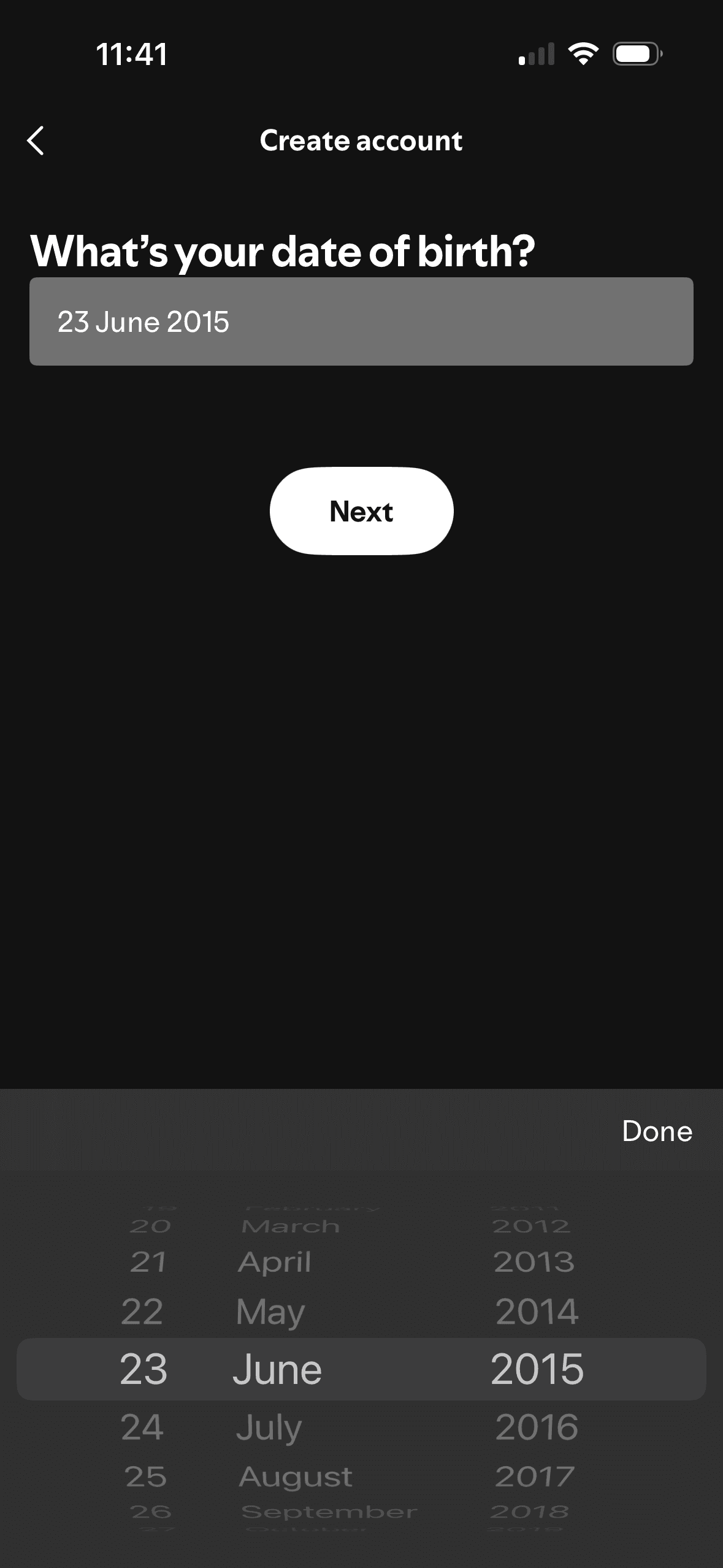
Spotify asks for date of birth on a dedicated account-creation step. This is staged disclosure because the flow presents one decision at a time; the screenshot does not show the total number of steps or why the data is needed.
View Spotify first-time setup: preference collection before playback →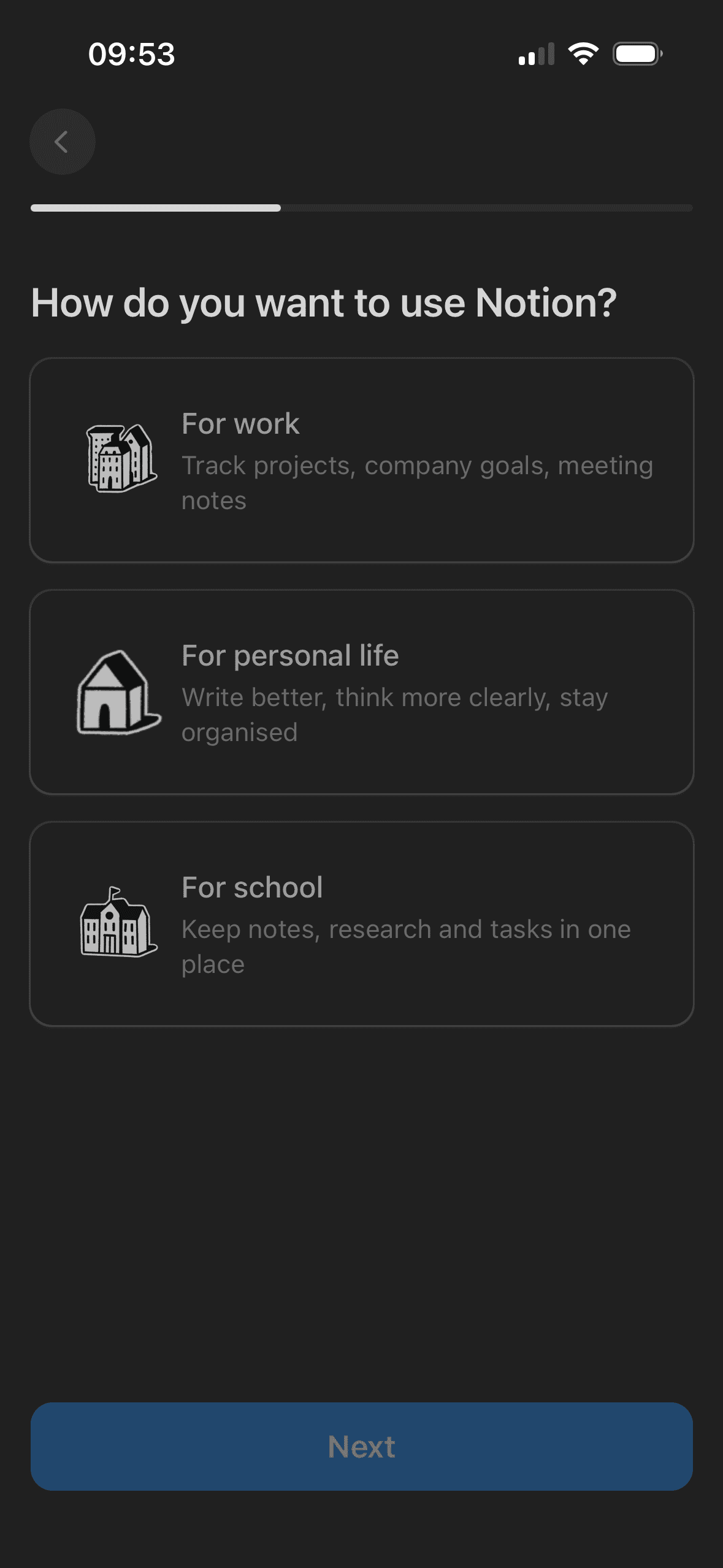
Notion asks how the person plans to use the product on a focused step and shows progress through the wider setup. This is visible staged disclosure; the screenshot does not show whether the question is optional, how the answer is used or whether the sequence improves completion.
View Notion onboarding: account setup, profiling, team access and product tour →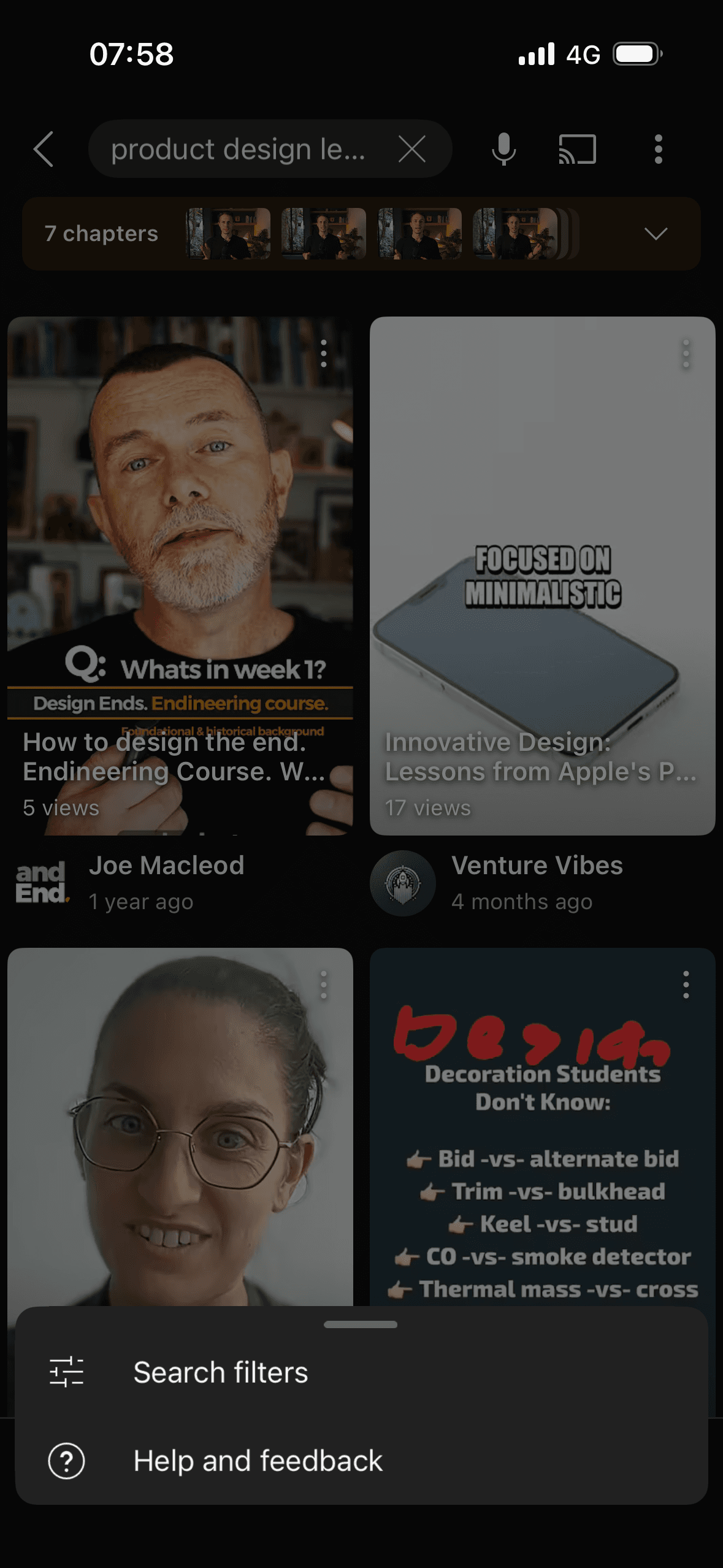
The overflow menu reveals Search filters and Help and feedback without keeping those secondary routes in the results header. This is an observable use of progressive disclosure; the screenshot does not show whether people discover the menu.
View YouTube search: history, suggestions, sponsored results and filters →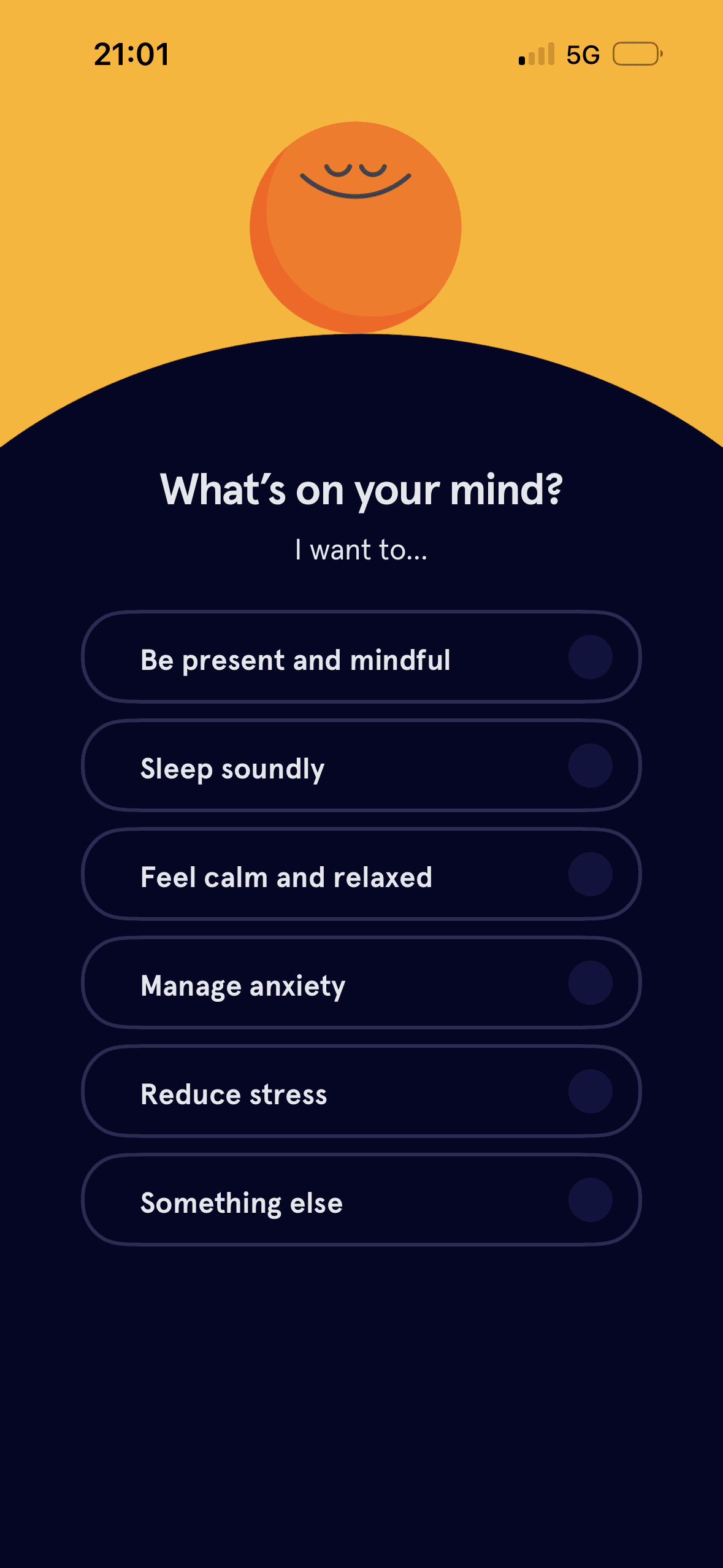
Headspace presents one wellbeing-goal question with six radio options, including Something else, on a focused step. This is staged disclosure; the screenshot does not explain how the answer is used, whether it is optional or whether the sequence reduces effort.
View Headspace onboarding: account creation, wellbeing claims, trial offers and a first exercise →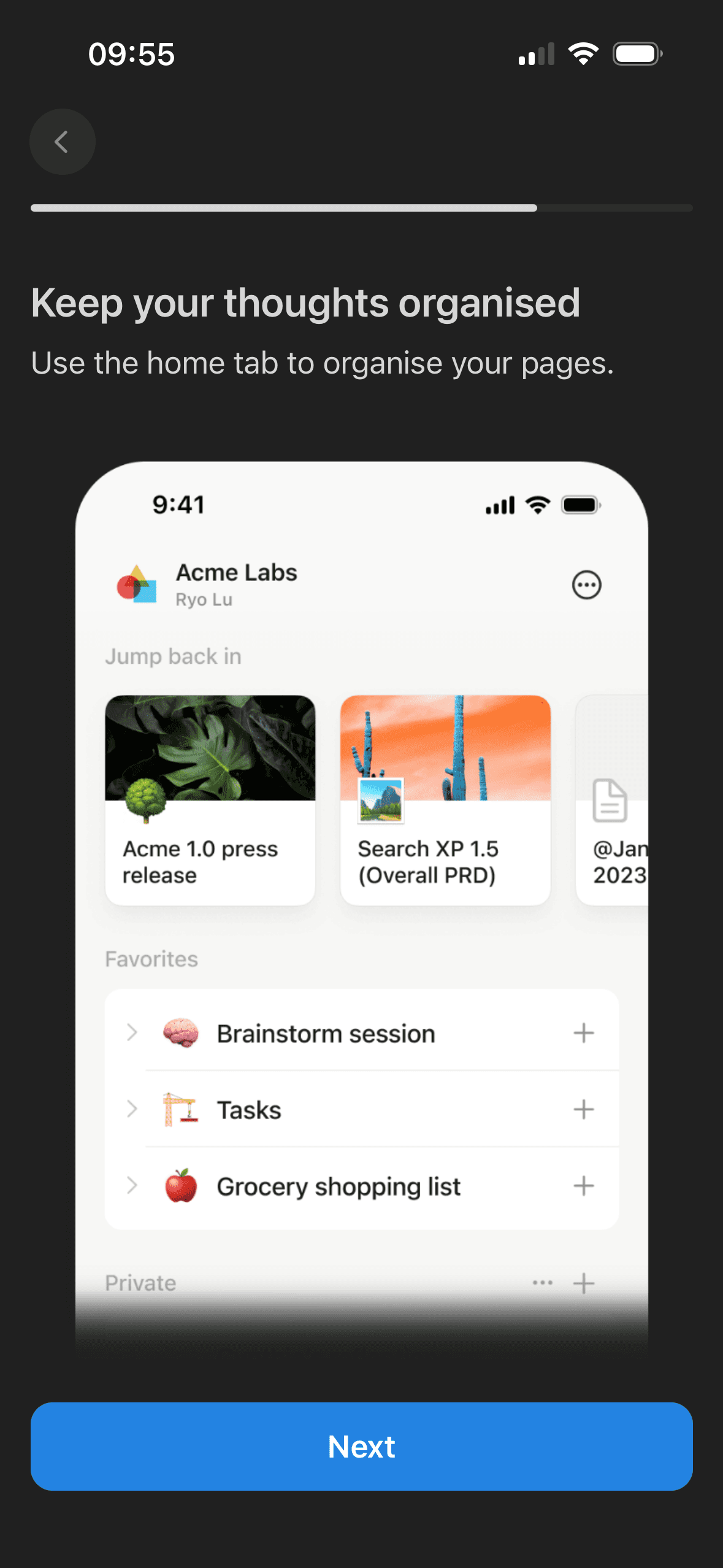
This walkthrough screen introduces one organisation topic and shows progress through the tour. That is staged disclosure; the capture does not show a Skip route, active practice or whether people understand and retain the explanation.
View Notion onboarding: account setup, profiling, team access and product tour →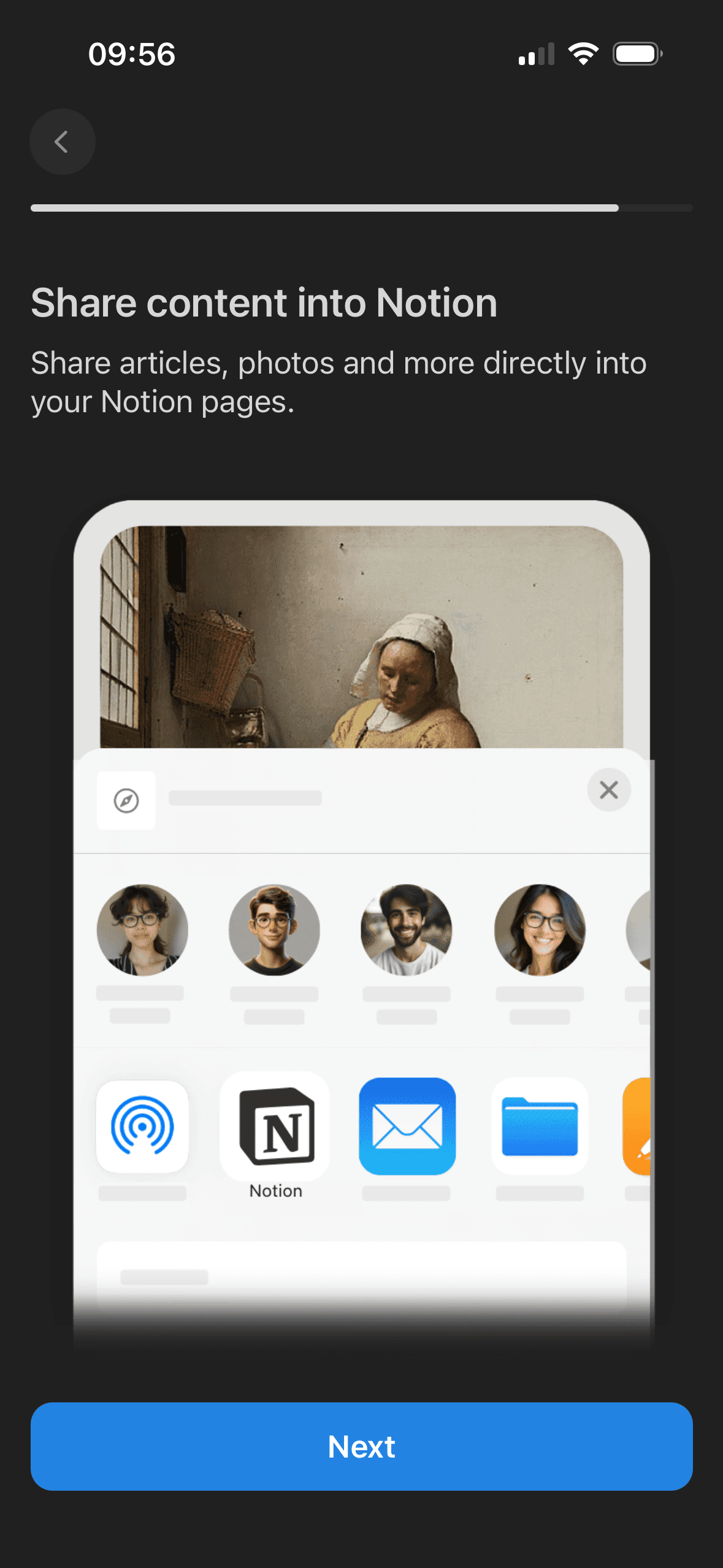
This later walkthrough screen introduces one sharing topic while other features remain outside the step. It is a visible staged sequence; its usefulness, optionality and effect on learning would still need to be tested.
View Notion onboarding: account setup, profiling, team access and product tour →